Mellor Iron Age Site 6th September 2003
For further information on the Mellor excavations see the Mellor OldVicarage Archaeological Dig website.
We visited the site of an Iron Age Settlement at Mellor, near Stockport, which is being excavated by the Mellor Archaeological Trust in association with the University of Manchester field archaeology unit. The dig has revealed enclosure ditches and roundhouse drainage gullies. Finds have included Roman as well as Iron Age pottery. We visited on one of the open days which allowed us a guided tour of the dig and the opportunity to view some of the finds in the nearby parish centre. Click here to see the location of the site at Mellor.

View of the site from the Mellor village side of the hill. The excavations are taking place on the opposite side of the church of St. Thomas which can just be seen at the top of the hill.

The view looking north-west from the hill top. It is easy to see why this would be a good site for a settlement.

One of the excavation volunteers works on a trench.

A deep rock-cut ditch. Note the layers of plated sandstone which could (relatively) easily be prised out.

Our guide describes what was found in this large trench.
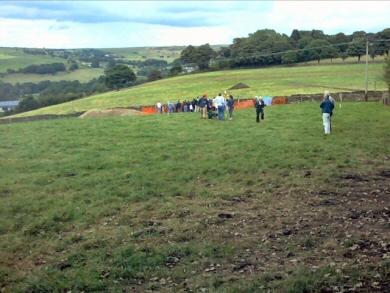
View towards the north-east. The first signs of an enclosure ditch were found in this field.

Another rock-cut ditch.

An enigmatic circular rock-cut feature.

The re-constructed Iron Age roundhouse.

Re-constructed drainage gully - there is much archaeological evidence for such stone-lined gullies on site.

We were also able to look around St. Thomas's church, next to the excavation site. It contains a wonderful carved stone font, probably dating from the 11th century and an equally impressive carved wooden pulpit from the 14th century.