Penny Street
Penny Street
Penny Street is an ancient street, probably of Roman origin. It is first referred to in about 1280. The precinct wall of the Dominican Friary abutted the rear of the medieval burgage plots on the east (right-hand) side of Penny Street.

Looking north down Penny Street.
St. Thomas's Church was designed by Edmund Sharpe and built in 1840 on land given by George Marton who was MP for Lancaster from 1837 to 1847. It was restored in 1894 and again in 1909.

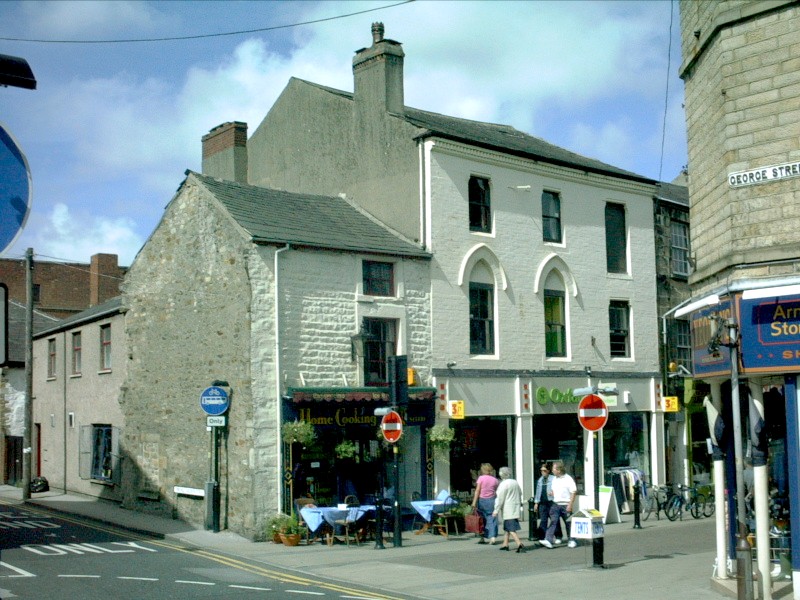
The junction of Penny Street and George Street.
Continue down Penny Street and turn left at Marks and Spencers into Common Garden Street.
Common Garden Street

Gillison's hospital in Common Garden Street was built in 1792 and demolished in the 1960s. Gillison's Lane roughly marks its location. The hospital originally comprised eight houses for unmarried women who received £3 and a new gown each year. Also in Common Garden Street was the Black Horse Inn which was the meeting place of the Philippi Club - an organisation consisting of prominent businessmen and civic leaders.

Continue to the end of Common Garden Street where it joins King Street.


 Next